

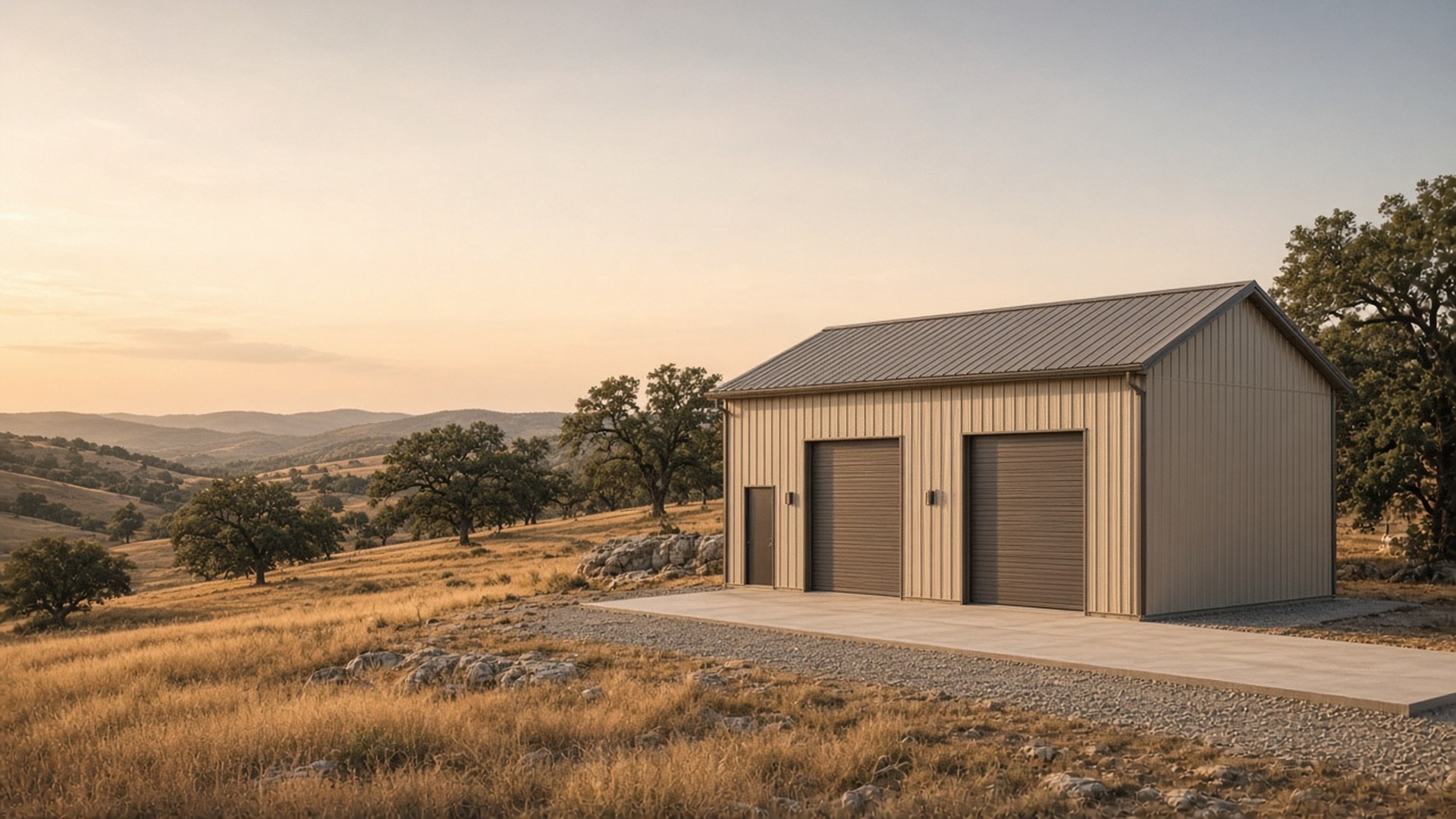
Metal & Steel Buildings in Texas
Plan, permit and price an installed steel building for your Texas site, from the Gulf Coast to the Panhandle.
Texas is big enough to have three building climates. A 40x60 shop near Corpus Christi has to handle Gulf wind and humidity. The same shop outside Amarillo has to carry Panhandle snow. And whether you need a city permit, a county permit, or a coastal windstorm certificate depends on exactly where the slab goes.
Here's what changes across Texas, where to check the rules for your property, and how to get a quote for an installed steel building.
Planning a shop, garage, or farm building in Texas? Want to know what your city or county will ask for before you spend money? Start with the two free tools below, then get a quote.
Is your property inside city limits? That changes the rules.
Texas does not have one building code for every acre of the state. It splits by city and county:
- Inside a city: State law adopts the International Residential Code as the municipal code for homes and the International Building Code as the municipal code for commercial buildings. Both are the editions "as it existed on May 1, 2012." Cities can adopt newer editions and local amendments, so the edition your city enforces may be newer. (Tex. Local Gov't Code §214.212 and §214.216)
- Outside city limits (unincorporated county): The state's county building-code rules cover new single-family houses and duplexes in counties that have adopted them by order. That subchapter doesn't mention shops, barns, or garages. (Tex. Local Gov't Code §233.151–233.153) That does not mean "no permit in the country." Counties and other local offices can still have requirements, so ask the county before you order.
What this means for you: a 30x40 garage in Plano and a 30x40 garage on acreage outside town can go through very different paperwork. Find out which office covers your parcel first. The permit finder does that by ZIP or place name.
200+ projects · $4.5M+ in building sales · 5-star customer reviews
What our customers say
“Jake made it very easy to design our garage. Communication has been great.”
“Worked with Jake on the design and the build came out exactly how I wanted it.”
“Jake did a great job and was very patient with all my questions. I would recommend him to any one looking for a new building.”
“Update; all 3 carports exceeded my expectations, the crew that installed them was efficient and top notch…very happy customer.. …”
“He was up front and took the time to explain the process, gave me advice in working with the city regarding permits and cement and treated me with friendly respect instead of focusing on purely making a sale.”
“Helpful and knew what they were talking about.No B S. Can't wait to see it on my property.Thanks Jake.”
On the coast? Plan the windstorm inspection before you pour.
The Texas Department of Insurance says properties in 14 coastal counties and in parts of Harris County east of Highway 146 are in a designated catastrophe area, where owners may need a policy from the Texas Windstorm Insurance Association (TWIA). To buy a TWIA policy, most properties need a certificate of compliance: a WPI-8 for work inspected while it's being built (by a TDI-appointed engineer or a TDI inspector), or a WPI-8-E for completed work (inspected by a Texas licensed professional engineer). TDI says most new construction requires an inspection, and that inspecting a finished structure "may cost more." (TDI: What you need to know about windstorm inspections)
What this means for you: if your building is in one of those areas and you want TWIA coverage on it, ask your insurance agent whether the building needs a certificate, and line up the inspection before construction starts, not after.
Wind, snow, and frost: one state, very different loads
There's no honest single wind or snow number for all of Texas, and you should be wary of any page that gives you one. Your building's design loads come from your exact address.
- Wind and snow for your address: the free ASCE Hazard Tool looks up site-specific wind and snow values under ASCE 7. Your engineered drawings and your local office have the final word.
- Frost depth and footing rules: set locally. Ask the office that covers your property.
- Climate, by the numbers. NOAA's 1991–2020 climate normals show how far apart Texas regions are:
| NOAA station (1991–2020 normals) | December average low | Average annual snowfall | Average annual rainfall |
|---|---|---|---|
| Corpus Christi | 49.8°F | 0.2 in | 31.74 in |
| Houston (Intercontinental) | 45.6°F | 0.1 in | 51.84 in |
| San Antonio | 42.4°F | 0.2 in | 32.38 in |
| Dallas–Fort Worth | 38.3°F | 1.6 in | 37.01 in |
| El Paso | 34.4°F | 2.8 in | 8.78 in |
| Amarillo | 25.7°F | 17.2 in | 19.66 in |
Source: NOAA NCEI U.S. Climate Normals, 1991–2020 (monthly and annual normals for stations USW00012924, USW00012960, USW00012921, USW00003927, USW00023044, USW00023047; data pulled Nov 16, 2026).
What this means for you:
- South Texas and the Gulf Coast have the mildest winters on this list, so winter is often a workable time to pour and build. Your concrete contractor makes the call on pour days.
- Houston and the coast get about 52 inches of rain a year. That means drainage, slab height, and condensation control matter. See why metal roofs drip and how to stop it.
- Dallas–Fort Worth sits on the edge, with December lows in the upper 30s. Plan pours around cold snaps.
- The Panhandle averages about 17 inches of snow a year at Amarillo and has the coldest winters here. Plan this winter and build in spring, and make sure the snow load on your drawings matches your address. See pole barn or metal building in snow country.
Sizes Texas buyers price most
Texans search for 30x40 and 40x60 buildings by name (Google autocomplete, Nov 15, 2026), and both are common for shops and equipment storage.
- 30x40: a two-to-three-bay garage or a working shop. See what a 30x40 metal garage really costs, with and without concrete.
- 40x60: a full shop with room for equipment, a lift, or a small business. See CMU block vs prefab steel for a 40x60 home shop.
- Building on raw land in the Hill Country or East Texas? Factor in clearing, a pad, and a driveway. See what a 30x40 garage with a slab costs on raw land.
We don't publish one price for Texas, because a fair price depends on your size, doors, site, and the wind and snow loads at your address. Use the steel building cost guide to see what drives price, and why metal building prices are all over the place to spot the costs other quotes leave out.
High wind? Frame type matters
On the Gulf Coast and in open country, ask what frame you're getting and what wind speed it's drawn for. Read red iron vs tubular steel in high-wind areas and how to get an honest estimate: tube frame vs I-beam.
Steel building or pole barn in Texas?
Plenty of Texas buyers price both. Compare them side by side in tube metal building vs pole barn, why steel buildings are now cheaper than pole barns, and the steel buildings vs pole barns guide.
How your quote works
- Tell us what you're building: size, use, doors, and your ZIP. We serve almost all of the lower 48 states, and a specialist confirms your ZIP.
- A building specialist reviews it. You get a quote within 24 hours of sending your project details. Once your order is accepted, your quote is your price.
- We send engineered drawings for your permit, and we give you everything you need for it.
- You (or your contractor) pull the permit and prep the site. Your concrete crew pours the slab to our drawings.
- We deliver and install your building. We sell installed buildings, not kits (installed vs DIY).
30-day deposit defense: cancel within 30 days of signing and we refund your deposit, subject to our Terms.†
Our building specialists bring over $4.5 million in sales and 200+ projects behind them.
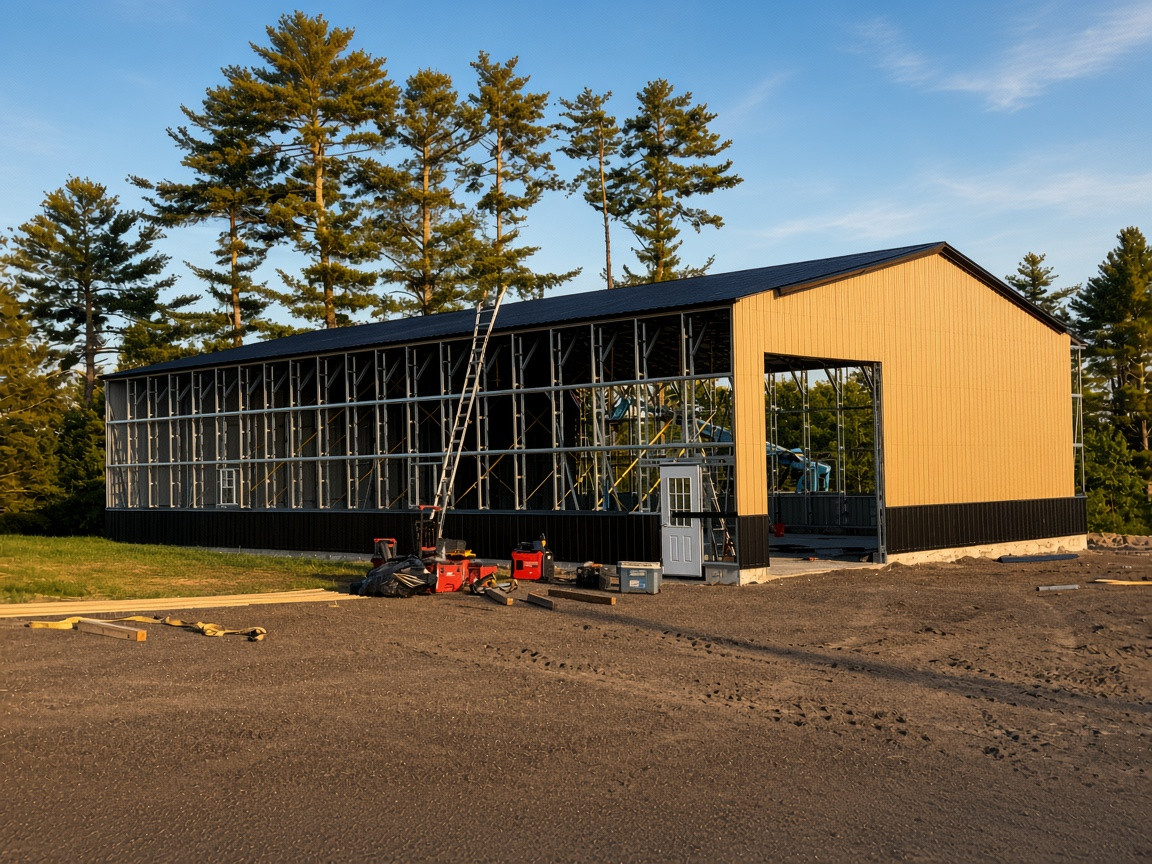
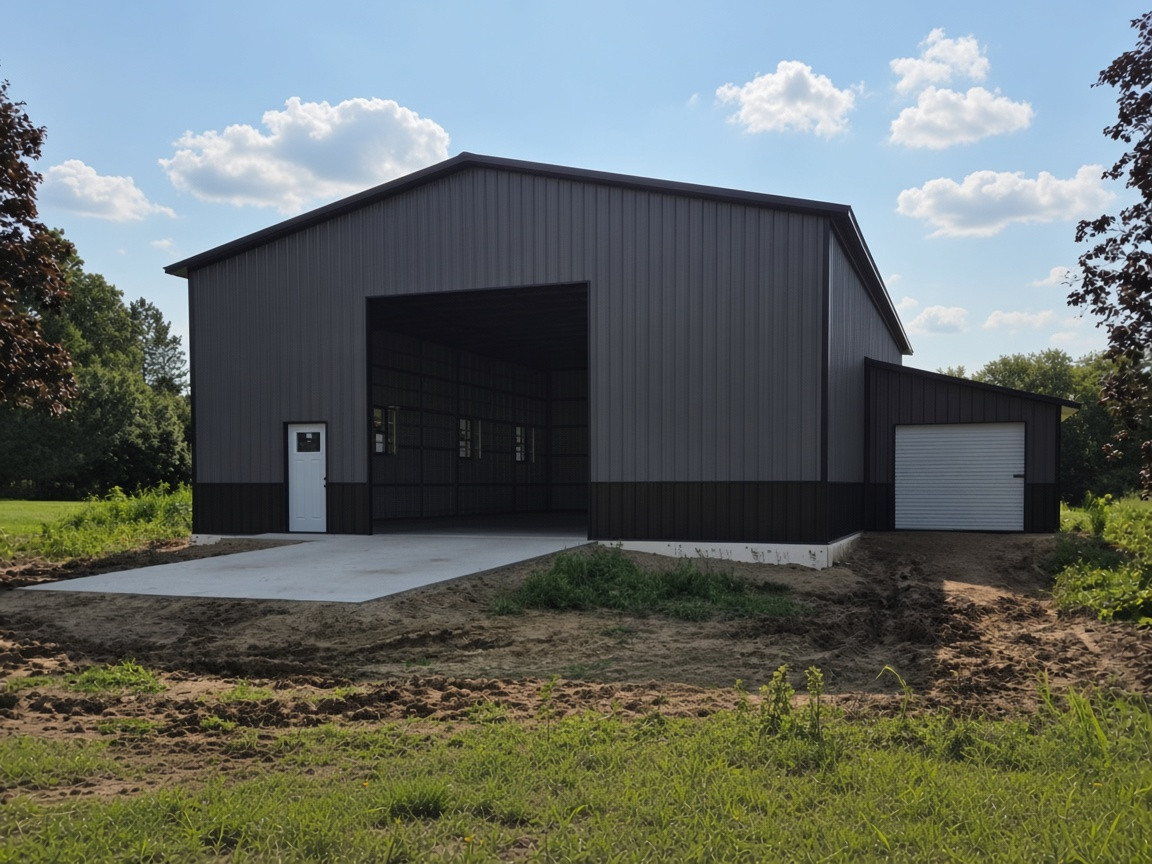
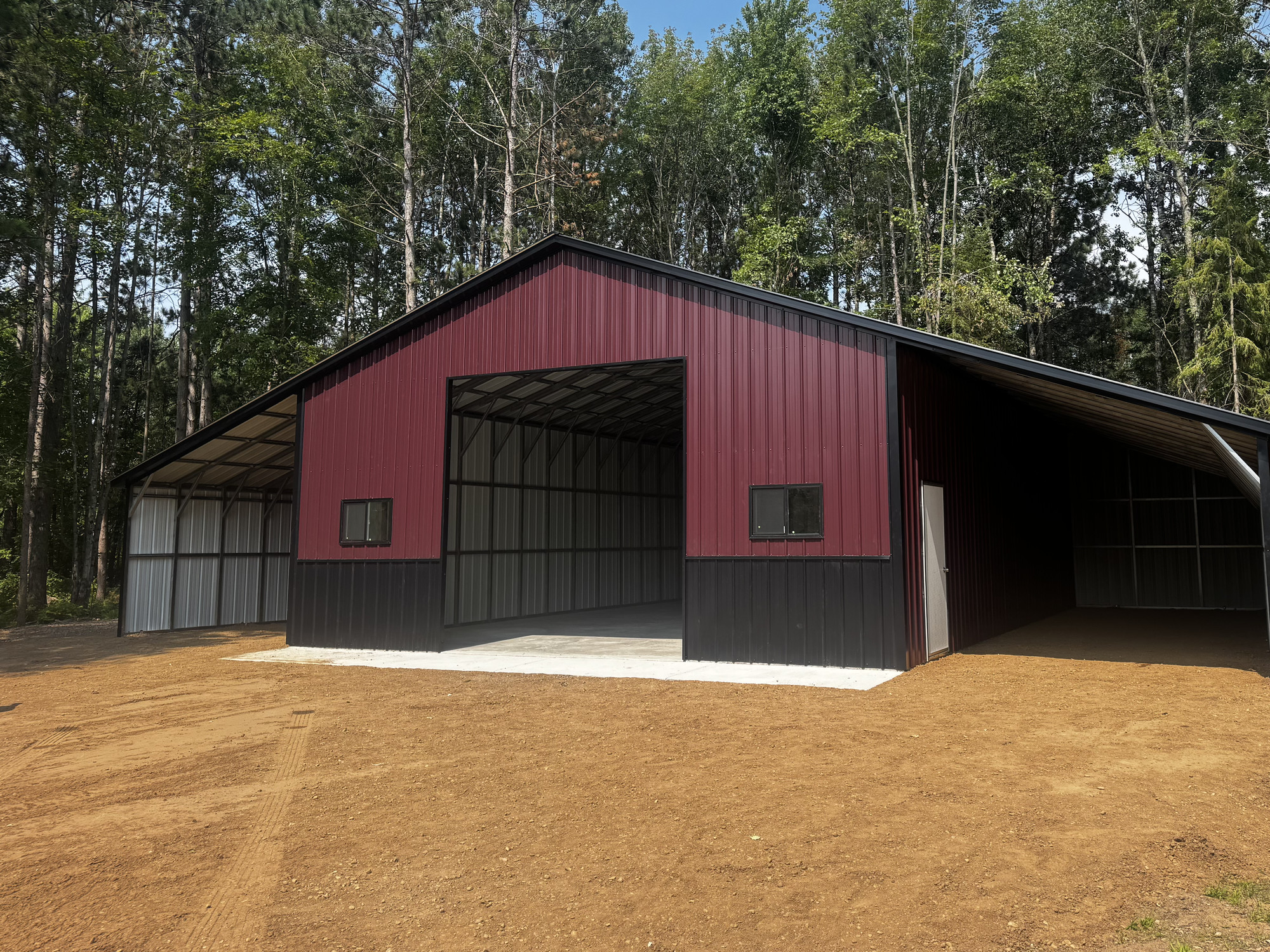
Recent builds
Real projects. Real steel.
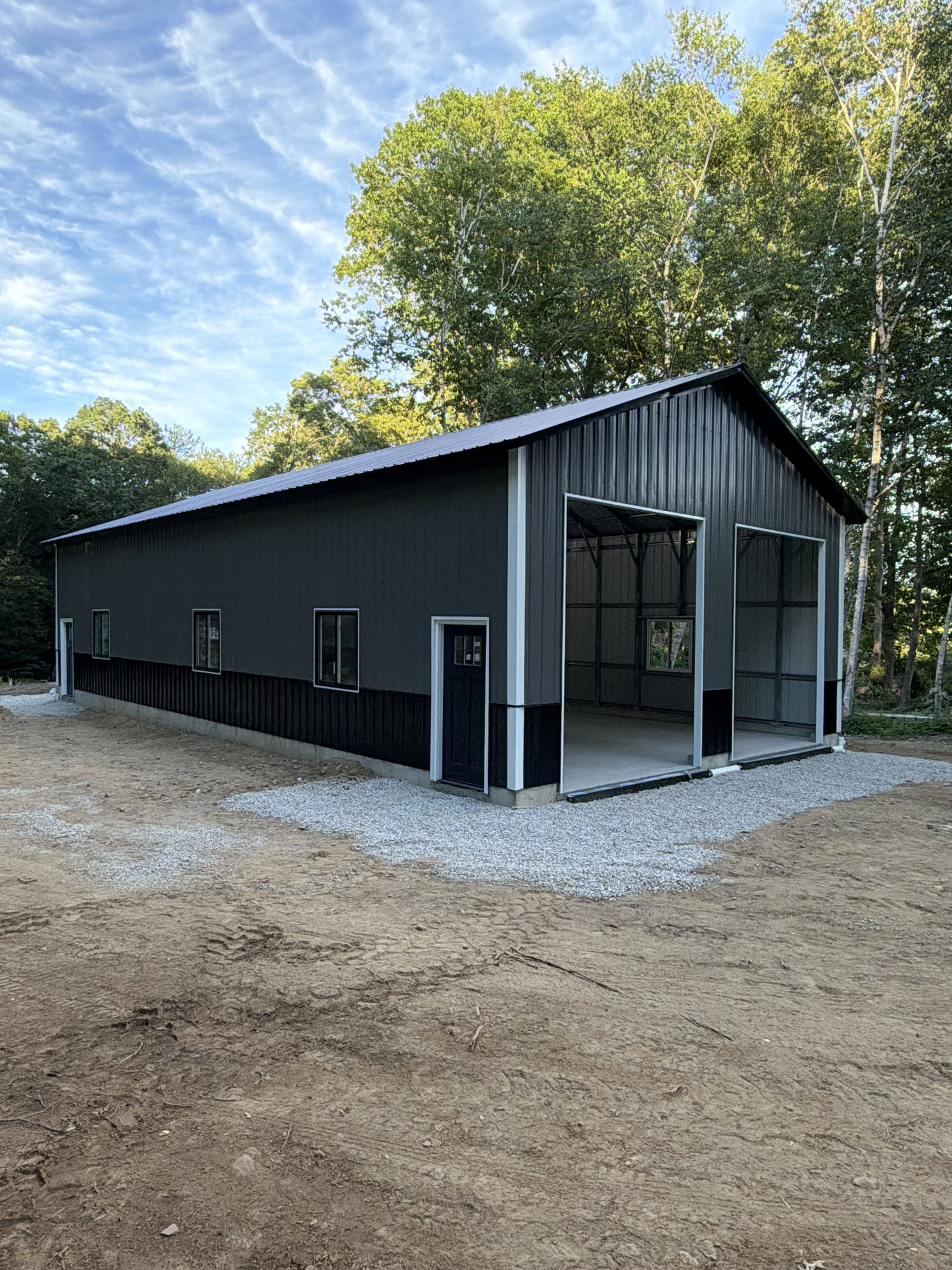
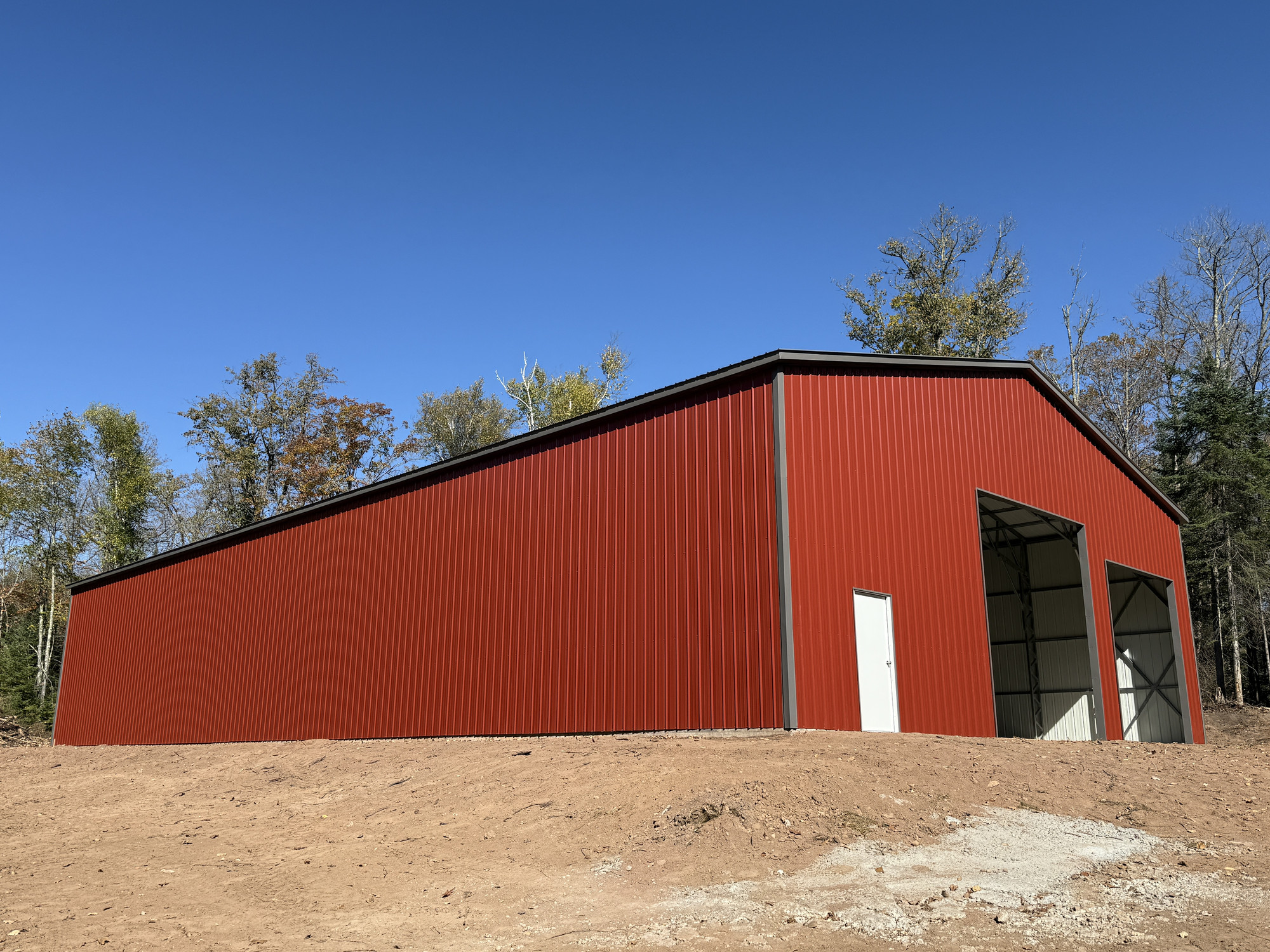
Paying for it
"Metal building financing texas" is a common search. Most buyers compare a personal loan, a home equity loan, or a farm or business loan. See how people finance a metal garage. Talk to your lender, and to your CPA about any tax treatment.
Before you sign anything
Ask any seller the same questions, including us. Use how to choose a metal building company, how to buy a metal building safely, why installs take so long, and what buyers of prefab garages wish they'd known.
Get your Texas steel building quote. Quotes within 24 hours.
Tell us the size, how you'll use it, and your ZIP. Once your order is accepted, your quote is your price.
Frequently asked questions
How much does a metal building cost in Texas?
It depends on size, frame, doors, site work, and the wind and snow loads at your address, which range from Gulf Coast wind to Panhandle snow. Our steel building cost guide explains what moves the price, and a quote for your exact building comes within 24 hours of sending your project details.
What does a 40x60 metal building cost in Texas?
A 40x60 price swings with wall height, doors, insulation, concrete, and the design loads for your site. Tell us your ZIP and how you'll use it, and we'll quote that building. See hidden costs before you compare numbers.
Do I need a permit for a metal building in Texas?
Inside city limits, usually yes: state law adopts the IRC and IBC as municipal codes, and cities run their own permits (§214.212, §214.216). Outside city limits, rules vary by county. Use the permit finder and ask the office before you order. See do you need a permit for a metal garage on a slab?
Do I need a windstorm certificate on the Texas coast?
If your property is in one of the 14 coastal counties or the part of Harris County east of Highway 146, and you want a TWIA policy, most properties need a WPI-8 or WPI-8-E certificate of compliance (TDI). Ask your insurance agent and plan the inspection before construction.
What wind and snow load does my Texas building need?
It depends on your address. Look it up for free with the ASCE Hazard Tool, then confirm with your local office and your engineered drawings.
Can I build a metal building in Texas in winter?
Often, yes, in South Texas and on the Gulf Coast, where NOAA's December average lows run in the 40s. Dallas–Fort Worth averages 38.3°F in December, and Amarillo averages 25.7°F (NOAA normals), so northern pours take more planning. Your concrete contractor decides pour days.
Can I finance a metal building in Texas?
Many buyers use a personal loan, home equity, or a farm or business loan. See how people finance a metal garage.
Do you install the building?
Yes. We sell installed steel buildings, not kits. If you're weighing DIY, read installed vs DIY first.