

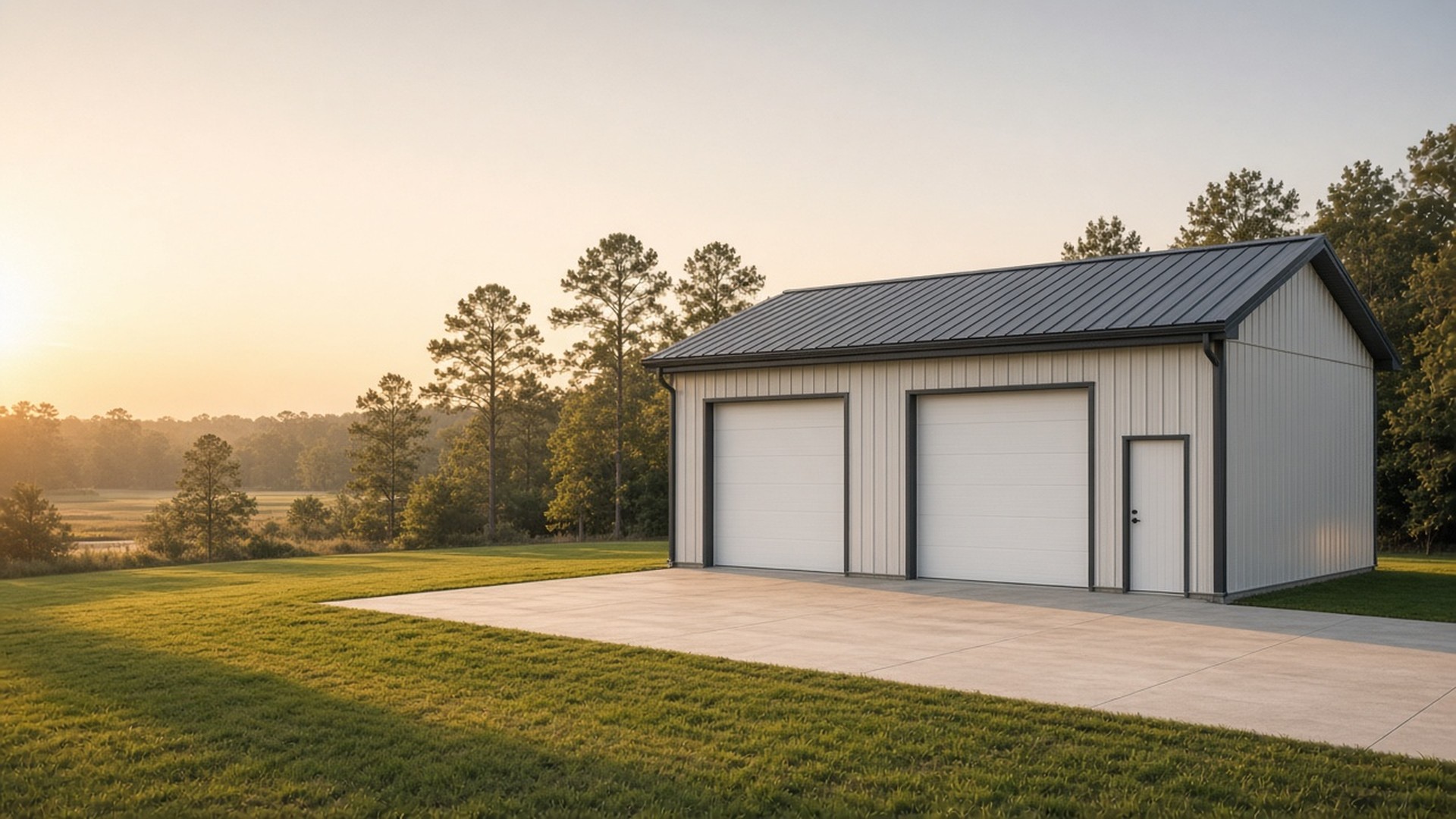
Metal & Steel Buildings in Maryland
The Maryland Building Performance Standards currently use the 2021 IBC, IRC, and IECC. Local jurisdictions may modify some of those codes, but not make the energy or accessibility codes weaker.
Maryland keeps the code simpler than most states. Each jurisdiction has to use the same edition of the same building codes, with room for some local changes. The official Department of Labor Building Codes Administration page calls this the Maryland Building Performance Standards: the International Building Code, International Residential Code, and International Energy Conservation Code, with state modifications. The official adopted-code matrix dated March 18, 2026, lists the 2021 IBC, 2021 IRC, and 2021 IECC for ordinary buildings.
Here's what changes across Maryland, where to check the rules for your property, and how to get a quote for an installed steel building.
Planning a shop, garage, or farm building in Maryland? Want to know what your city or county will ask for before you spend money? Start with the two free tools below, then get a quote.
The 2021 codes are the current Maryland Building Performance Standards
The official Maryland Department of Labor, Building Codes Administration page states that the Maryland Building Performance Standards (MBPS) "require each jurisdiction in Maryland to use the same edition of the same building codes," namely the IBC, IRC, and IECC, with modifications by the State. "Each local jurisdiction in Maryland may modify these codes to suit local conditions with exception to the International Energy Conservation Code (IECC) and Maryland Accessibility Code (MAC). The Energy Code and the Accessibility Code can be made more stringent but not less."
The official Current Adopted Building-Related Codes in the State of Maryland matrix, dated March 18, 2026, lists the 2021 IBC (MBPS), 2021 IRC (MBPS), and 2021 IECC (MBPS) for all buildings except modular and state-owned buildings. The same matrix lists 2021 editions for the existing-building path as well.
Ask the office that covers your property which local modifications, if any, apply to your site, and what they want in the permit set. Do not treat a Western Maryland mountain site and a Chesapeake site as interchangeable.
What this means for you: Look up the office that covers your parcel with the permit finder, then ask about local modifications, what they want in the permit set, and whether any coastal or critical-area reviews apply. Bring a clear site plan. We provide engineered drawings for your permit application.
200+ projects · $4.5M+ in building sales · 5-star customer reviews
What our customers say
“Jake made it very easy to design our garage. Communication has been great.”
“Worked with Jake on the design and the build came out exactly how I wanted it.”
“Jake did a great job and was very patient with all my questions. I would recommend him to any one looking for a new building.”
“Update; all 3 carports exceeded my expectations, the crew that installed them was efficient and top notch…very happy customer.. …”
“He was up front and took the time to explain the process, gave me advice in working with the city regarding permits and cement and treated me with friendly respect instead of focusing on purely making a sale.”
“Helpful and knew what they were talking about.No B S. Can't wait to see it on my property.Thanks Jake.”
Wind, snow, and frost: one state, very different loads
There's no honest single wind or snow number for all of Maryland, and you should be wary of any page that gives you one. Your building's design loads come from your exact address.
- Wind and snow for your address: the free ASCE Hazard Tool looks up site-specific wind and snow values under ASCE 7. Your engineered drawings and your local office have the final word.
- Frost depth and footing rules: set locally. Ask the office that covers your property.
- Climate, by the numbers. NOAA's 1991–2020 climate normals show how far apart Maryland regions are:
| NOAA station (1991–2020 normals) | December average low | Average annual snowfall | Average annual rainfall |
|---|---|---|---|
| Baltimore–Washington | 29.6°F | 19.3 in | 45.00 in |
Source: NOAA NCEI U.S. Climate Normals, 1991–2020 (monthly and annual normals for station USW00093721; data pulled Nov 16, 2026. This is one official station, not a statewide climate map; data pulled Nov 16, 2026).
What this means for you:
- The Baltimore–Washington station averages a December low of 29.6°F, about 19.3 inches of snow a year, and 45.00 inches of precipitation. Winter pours need freeze planning, and drainage and condensation still matter. See pole barn or metal building in snow country and why metal roofs drip and how to stop it.
- Western Maryland and the Eastern Shore can differ from this station. This table is one official site, not a substitute for a mountain or coastal address lookup. Look up your address with the ASCE Hazard Tool and confirm with the office.
- Along the Bay or the Atlantic, ask what design wind speed your building is drawn for.
Sizes Maryland buyers price most
30x40 is the classic two-to-three-bay garage or working shop. 40x60 is a full shop with room for equipment, a lift, or a small business.
- 30x40: see what a 30x40 metal garage really costs, with and without concrete.
- 40x60: see CMU block vs prefab steel for a 40x60 home shop.
We don't publish one price for Maryland, because a fair price depends on your size, doors, site, and the wind and snow loads at your address. Use the steel building cost guide to see what drives price, and why metal building prices are all over the place to spot the costs other quotes leave out.
High wind? Frame type matters
Coastal and Bay sites can add a wind conversation, and snow is still a real load at the Baltimore–Washington station. For frame choices, read red iron vs tubular steel in high-wind areas and honest shop estimate: tube vs I-beam.
Steel building or pole barn in Maryland?
Plenty of Maryland buyers price both. Compare them side by side in tube metal building vs pole barn, why steel buildings are now cheaper than pole barns, and the steel buildings vs pole barns guide.
How your quote works
- Tell us what you're building: size, use, doors, and your ZIP. We serve almost all of the lower 48 states, and a specialist confirms your ZIP.
- A building specialist reviews it. You get a quote within 24 hours of sending your project details. Once your order is accepted, your quote is your price.
- We send engineered drawings for your permit, and we give you everything you need for it.
- You (or your contractor) pull the permit and prep the site. Your concrete crew pours the slab to our drawings.
- We deliver and install your building. We sell installed buildings, not kits (installed vs DIY).
30-day deposit defense: cancel within 30 days of signing and we refund your deposit, subject to our Terms.†
Our building specialists bring over $4.5 million in sales and 200+ projects behind them.
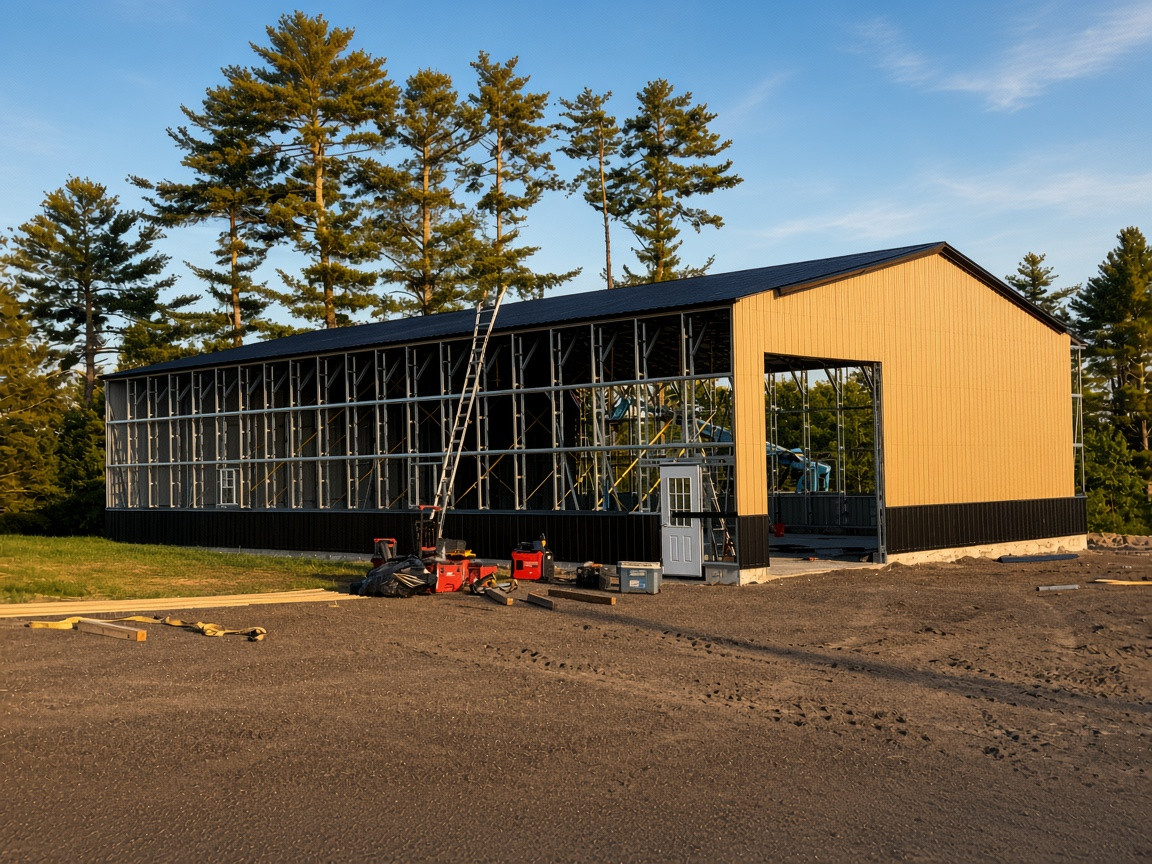
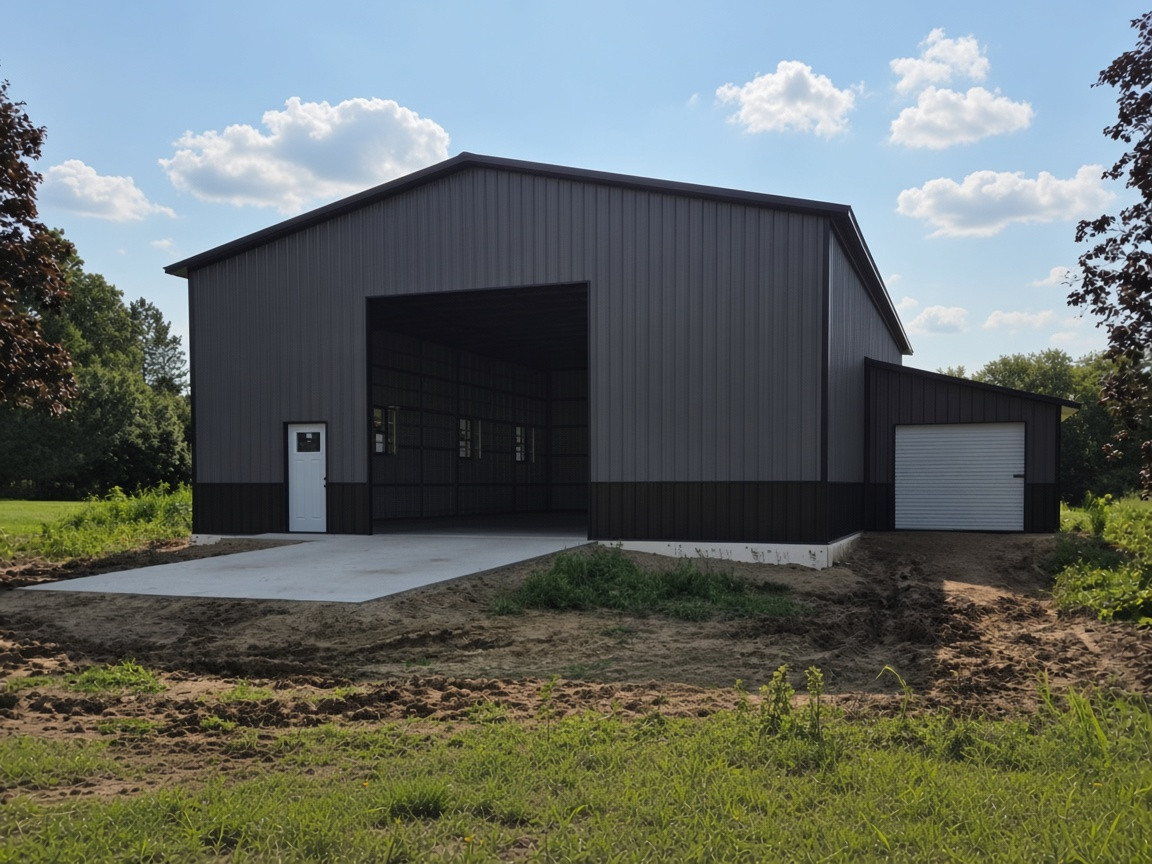
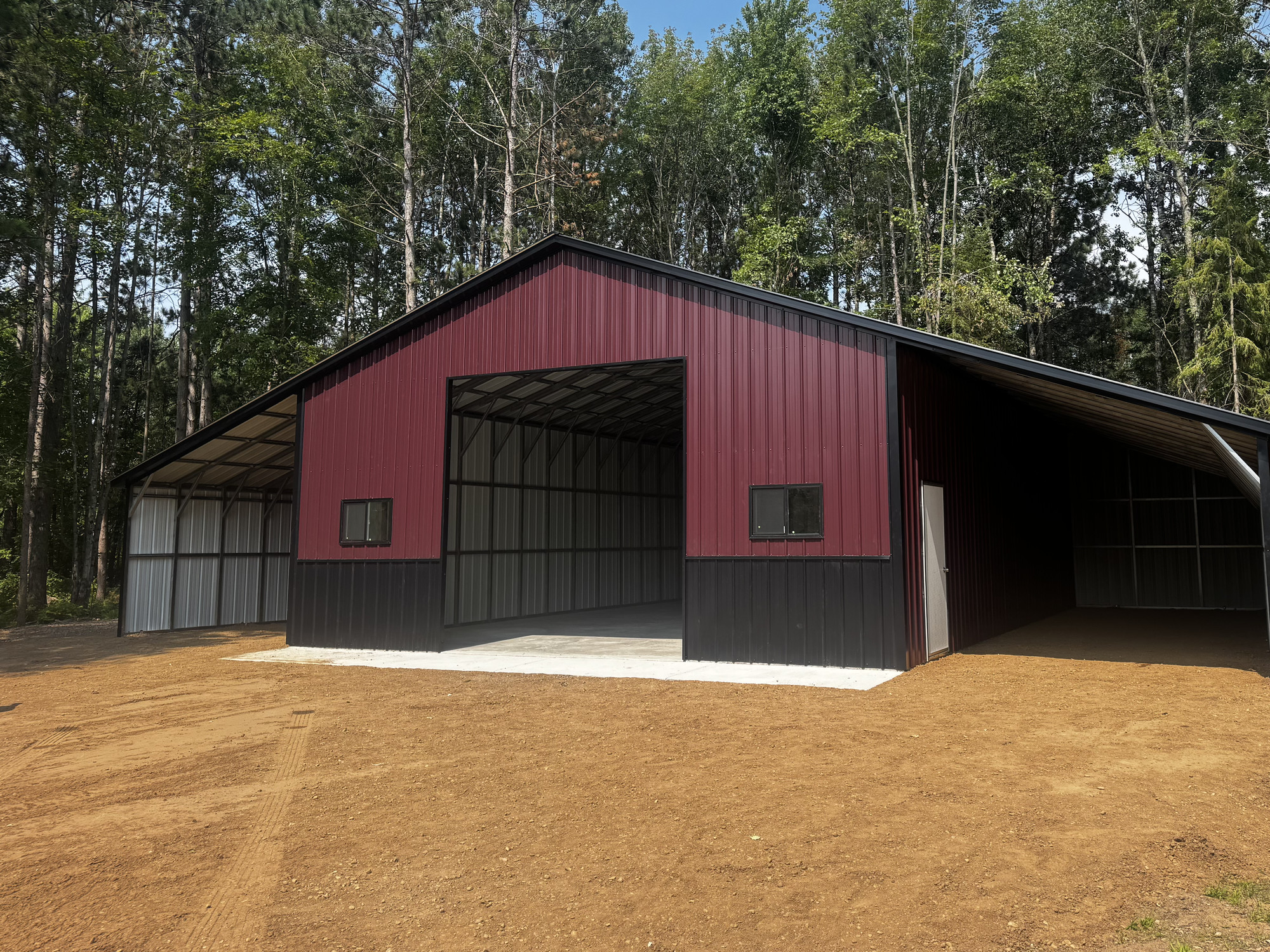
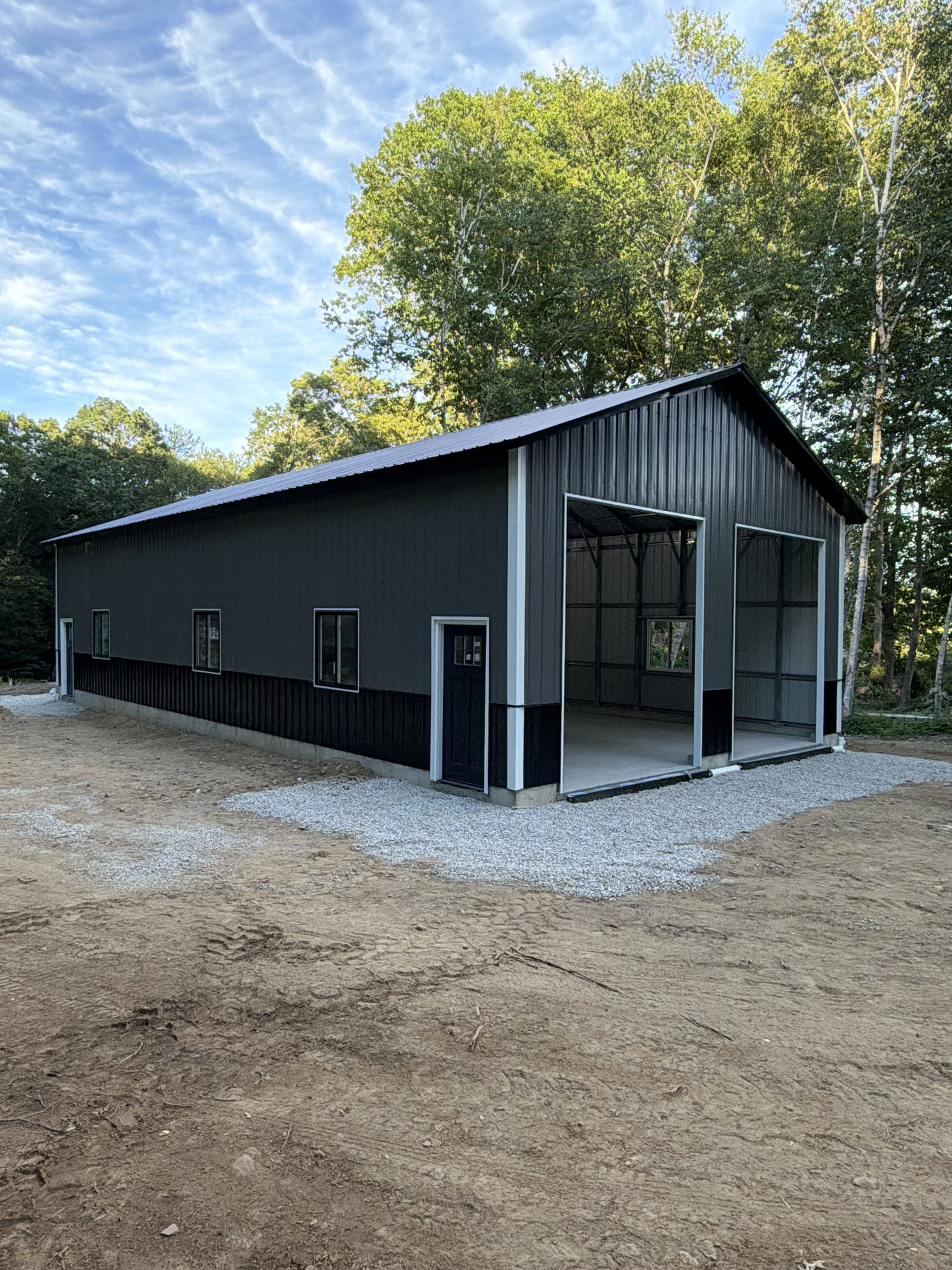
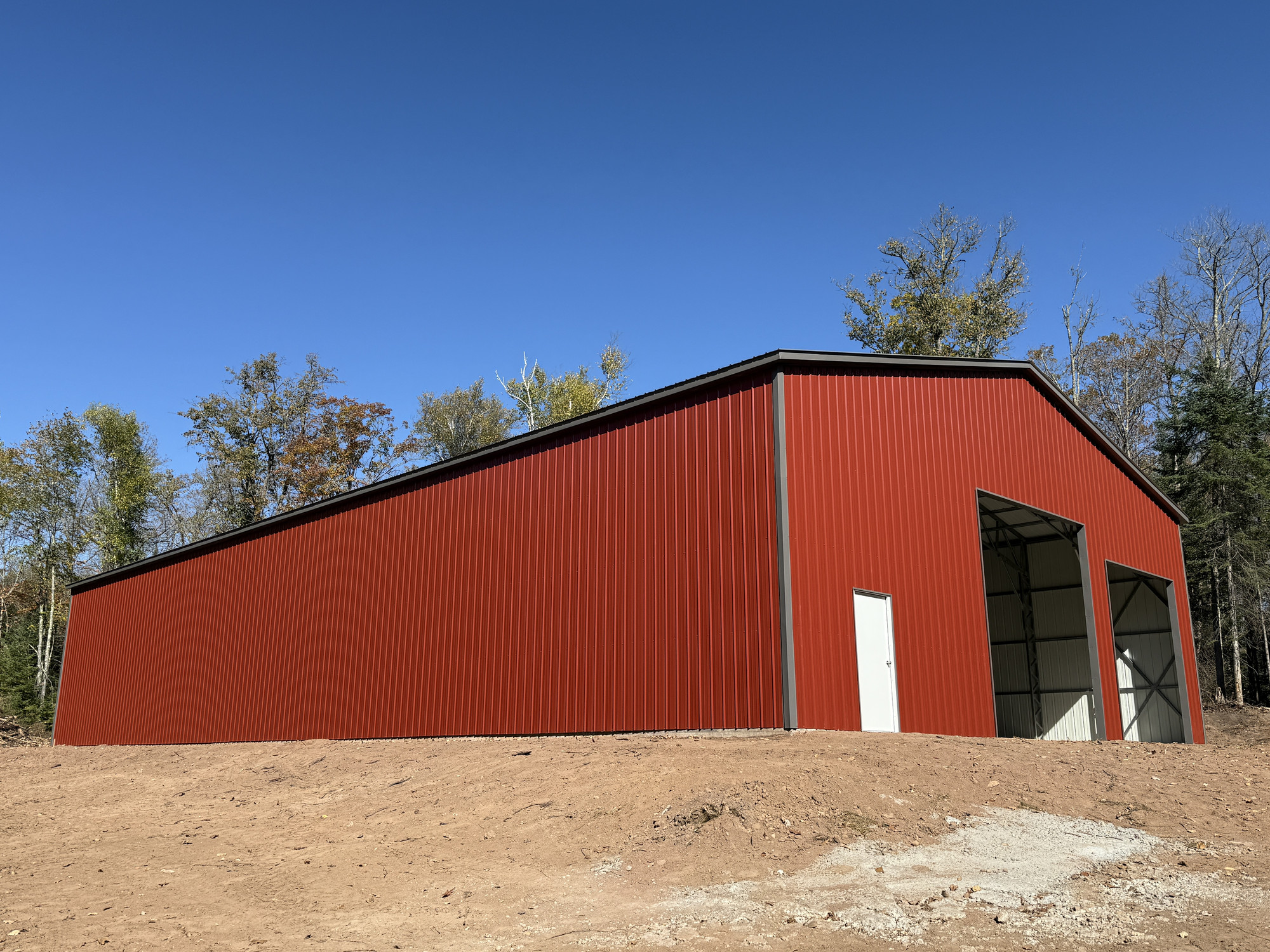
Recent builds
Real projects. Real steel.
Before you sign anything
Ask any seller the same questions, including us. Use how to choose a metal building company, how to buy a metal building safely, why installs take so long, and what buyers of prefab garages wish they'd known.
Get your Maryland steel building quote. Quotes within 24 hours.
Tell us the size, how you'll use it, and your ZIP. Once your order is accepted, your quote is your price.
Frequently asked questions
How much does a metal building cost in Maryland?
It depends on size, frame, doors, site work, and the wind and snow loads at your address, including snow and wind at your address. Our steel building cost guide explains what moves the price, and a quote for your exact building comes within 24 hours of sending your project details.
What does a 40x60 metal building cost in Maryland?
A 40x60 price swings with wall height, doors, insulation, concrete, and the design loads for your site. Tell us your ZIP and how you'll use it, and we'll quote that building. See hidden costs before you compare numbers.
Do I need a permit for a metal building in Maryland?
Often, yes. The official March 18, 2026, matrix lists the 2021 IBC, IRC, and IECC as the current MBPS (Maryland code matrix), and the local office may have modifications. Ask before you order. Use the permit finder and ask before you order. See do you need a permit for a metal garage on a slab?
What wind and snow load does my Maryland building need?
It depends on your address. Look it up for free with the ASCE Hazard Tool, then confirm with your local office and your engineered drawings.
Can I build a metal building in Maryland in winter?
With planning. The Baltimore–Washington station's December average low is 29.6°F, with about 19.3 inches of snow a year (NOAA normals). Your concrete contractor decides pour days.
(No state-specific Google autocomplete was in the Nov 15, 2026 Dreamy capture for Maryland. The permit, load, and winter questions mirror the permit finder's existing FAQ themes. No search volumes used.)