Frame, doors & gauge · 4 min read
12 Gauge vs 14 Gauge Frame: What Your Door and Hoist Actually Need
We recommend the thicker frame steel. The upgrade is small next to the building price, and a square-tube frame is not built to hang a hoist or a loft.
Part of the Steel Buildings vs. Pole Barns
Quick answers
- Should You Choose 12 Gauge or 14 Gauge for the Frame?
- Buyers often come to us already comparing a 12-gauge frame with a 14-gauge frame, especially once a larger door enters the conversation. Someone on r/metalbuildings asked a version of this exact question: whether a thinner-gauge prefab building could take an insulated garage door and a chain hoist. More
- Can You Hang a Hoist or Add a Loft in a Square-Tube Building?
- This is the part we want you to hear clearly, because it is the point where a lot of shop plans run into the limits of the building. More
- How Do You Confirm the Frame and Panels Match Your Order?
- On delivery day, you should be able to check that what arrived is what you bought. More
- What Should You Decide Before You Order?
- If you are comparing gauges because of a door, a hoist, or future storage, bring that up while the design is still open. We will tell you to go with the thicker steel, and we will tell you straight if a hoist or loft is not something this type of building can take. More
When you are choosing a frame, we tell you to go with the thicker-gauge steel. That upgrade is not that much more relative to the cost of the building, and it is the straightforward way to get a sturdier frame around the doors and openings you care about. What you cannot do is hang a hoist from the frame or add a loft into a square-tube steel building. Storage has to be freestanding.
That is the short answer we give every customer who starts comparing gauges. The rest of this post walks through why we take that position, what a bigger door does and does not change, and how to confirm you received the steel you ordered.
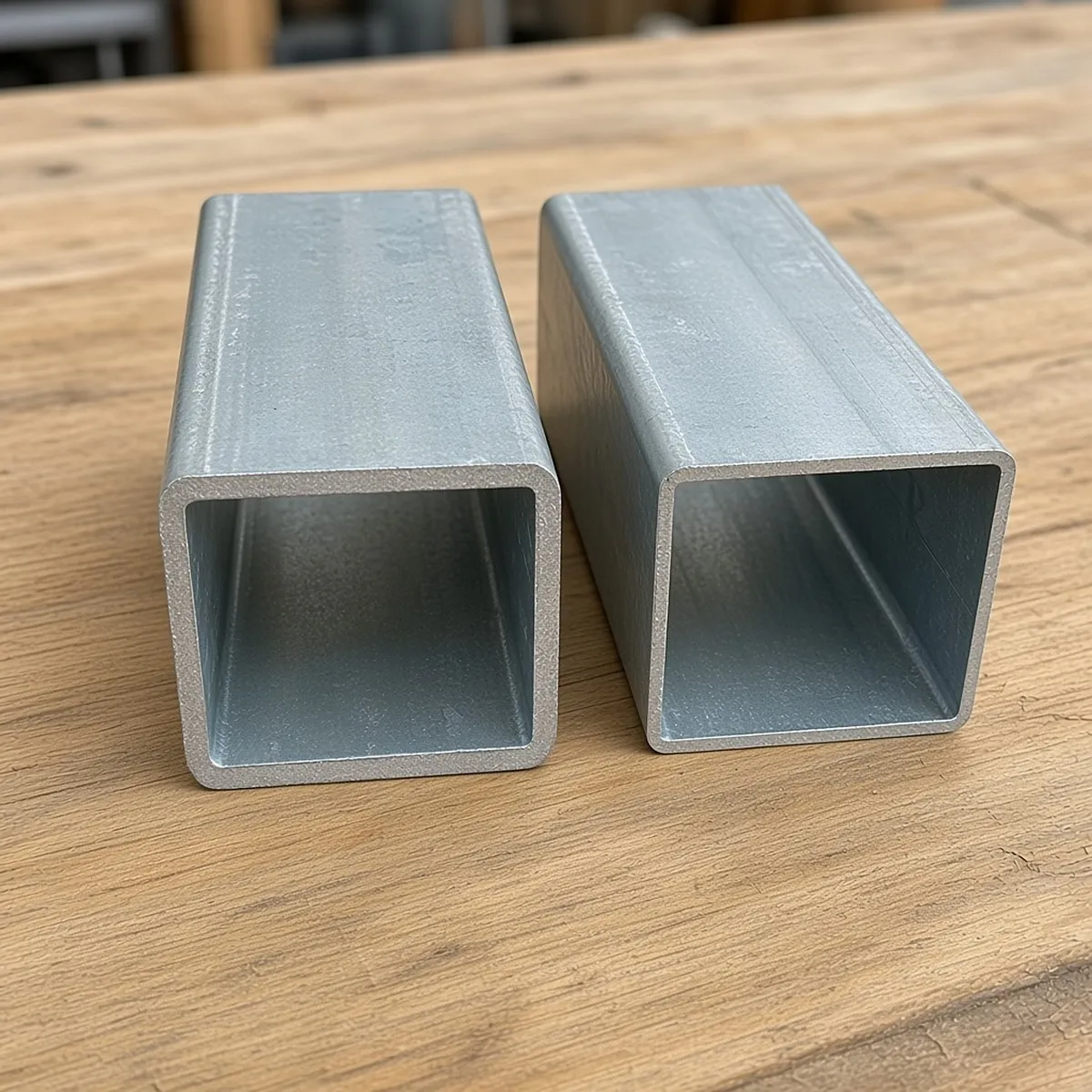
Should You Choose 12 Gauge or 14 Gauge for the Frame?
Buyers often come to us already comparing a 12-gauge frame with a 14-gauge frame, especially once a larger door enters the conversation. Someone on r/metalbuildings asked a version of this exact question: whether a thinner-gauge prefab building could take an insulated garage door and a chain hoist. The door size in that thread is the poster's, not a package we sell, but the decision is one we talk through all the time.
Our advice does not change with the sales pitch of the week. Go with the thicker steel. The difference in cost is small when you look at it next to the building as a whole, and you are the one who will live with the frame. We would rather you spend a little more now than talk yourself into the thinner option because it looks cheaper on paper.
We have not seen sagging or other problems from under-built framing around big doors on our jobs. We also do not leave gauge as a fuzzy point in the conversation. Once we tell you to go thicker, there is nothing left to misunderstand. Thicker is the recommendation, and we say it plainly.
Can You Hang a Hoist or Add a Loft in a Square-Tube Building?
This is the part we want you to hear clearly, because it is the point where a lot of shop plans run into the limits of the building.
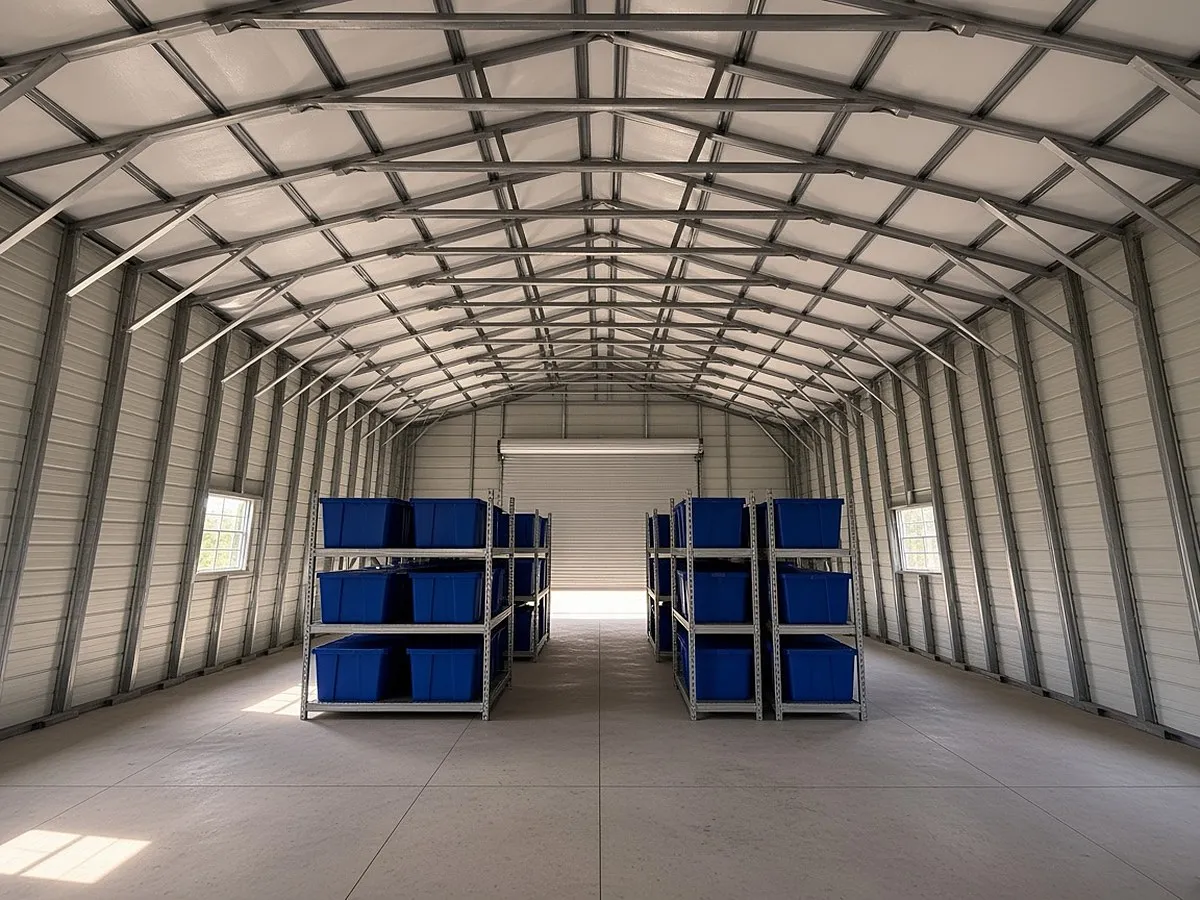
Customers cannot hang hoists from these buildings. If you are going to do storage, it all needs to be freestanding. You cannot just add lofts into square-tube steel buildings, and we always tell customers that before they order.
If a chain hoist, an engine hoist, or overhead storage is part of how you want to use the space, plan on a freestanding system that does not rely on the frame. Do not buy a thinner frame now and assume you can hang something from it later. The building is not designed for that, and we will not tell you otherwise to make a sale.
The same rule applies if the hoist is only a "maybe later" idea. Plan the storage so it stands on its own. That way the frame does the job it is built to do, and your hoist or shelving does its job without leaning on the steel in a way it should not.
How Do You Confirm the Frame and Panels Match Your Order?
On delivery day, you should be able to check that what arrived is what you bought.
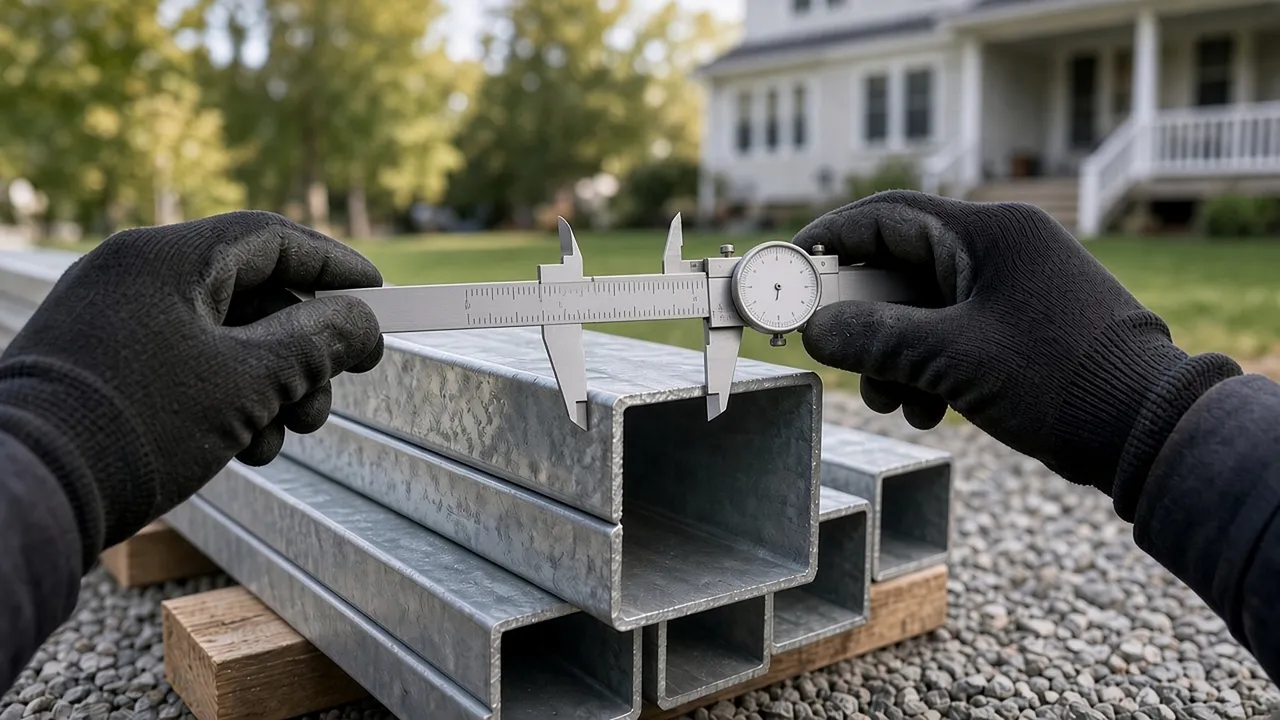
There are not that many color options, so color is usually obvious once the building is on site. For the steel itself, you can use a micrometer to check the thickness of the framing and the panels against the specs on your order. That is a simple, physical check, and it is the most direct way to confirm you received the gauge you paid for.
Have the order in front of you when you do it. If something does not match, the person to call is the person who sold you the building. Getting the specs in writing before delivery is what makes that conversation possible.
| Question | Our answer |
|---|---|
| 12 gauge or 14 gauge frame? | Go with the thicker steel (12 gauge); the added cost is small next to the whole building |
| Hang a hoist from the frame? | No. Use a freestanding system |
| Add a loft? | No. Storage has to be freestanding |
| Check what arrived? | Measure framing and panels with a micrometer against your order |
What Should You Decide Before You Order?
If you are comparing gauges because of a door, a hoist, or future storage, bring that up while the design is still open. We will tell you to go with the thicker steel, and we will tell you straight if a hoist or loft is not something this type of building can take.
Tell us the size you are considering, the doors you want, and how you plan to use the space. We will go through the frame with you and put the details in the order so you have something to check when the building arrives.
 The full guideSteel Buildings vs. Pole BarnsAn honest comparison of steel buildings and post-frame pole barns for workshops, garages, and ag buildings — including when a pole barn is the better call.